Wisdom tooth pain at the back of your mouth can be difficult to understand. Is the tooth simply coming through the gum, or is it stuck in a position where it cannot erupt properly?
One possible reason for recurring discomfort is an impacted wisdom tooth.
Wisdom teeth, also called third molars, are the last permanent teeth at the back of the mouth. Some emerge normally and remain healthy. Others may not have enough space to come through properly and can remain partly or completely beneath the gum.
An impacted wisdom tooth does not always cause symptoms. However, when problems develop, you may notice pain, gum swelling, difficulty cleaning the area, or discomfort while chewing.
Knowing the possible warning signs can help you understand when a dental examination may be useful.
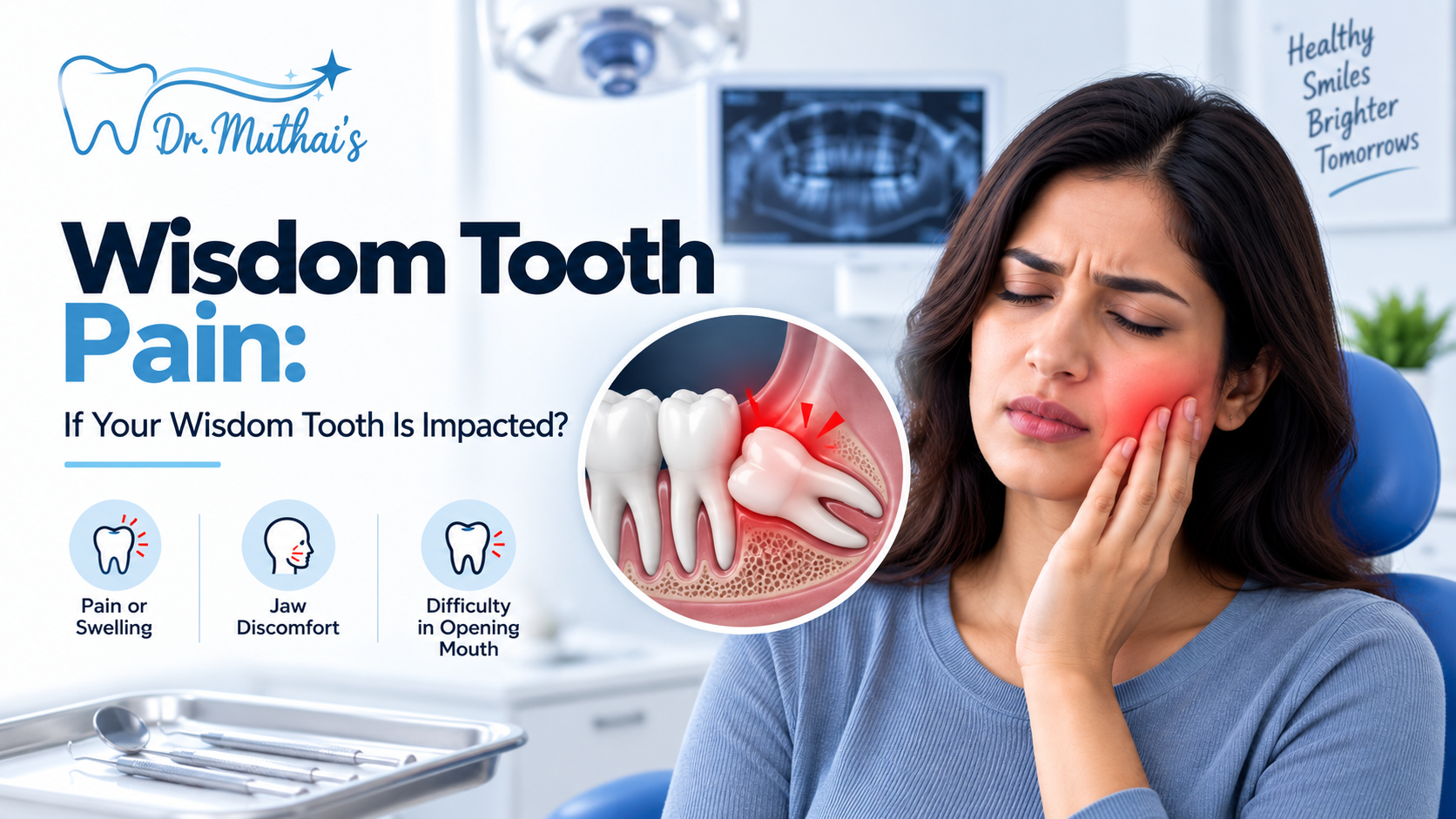
What Is an Impacted Wisdom Tooth?
A wisdom tooth is considered impacted when it does not fully emerge into its expected position.
This may happen because there is limited space at the back of the jaw or because the tooth is developing in an unusual direction.
Some impacted teeth remain completely beneath the gum, while others partially break through.
The tooth may also be angled toward another molar or positioned differently from the surrounding teeth.
You usually cannot determine the exact position simply by looking in the mirror. A dentist may need to examine the area and use a dental X-ray to understand how the tooth is positioned beneath the gum.
Does an Impacted Wisdom Tooth Always Hurt?
No.
An impacted wisdom tooth can sometimes remain without noticeable symptoms.
This means the absence of pain does not necessarily tell you whether a wisdom tooth is impacted.
Problems are more likely to become noticeable when the position of the tooth contributes to inflammation, infection, food trapping, decay, or difficulty maintaining the surrounding area.
When symptoms do occur, wisdom tooth pain is often one of the first things people notice.
Pain at the Back of Your Mouth
Pain or tenderness behind the last visible molar can be a sign that a wisdom tooth needs to be assessed.
The discomfort may be mild at first.
Some people notice pressure or soreness when chewing, while others experience pain that becomes stronger over time.
The pain may also come and go.
Recurring discomfort should not automatically be ignored simply because it improves temporarily. The underlying position of the wisdom tooth may still be contributing to the problem.
Swollen or Tender Gums
Look at the gum around the very back tooth.
When a wisdom tooth is only partly visible, the surrounding gum can sometimes become red, swollen, or tender.
A partially erupted tooth may leave an area where food and bacteria can collect.
Because the space is difficult to reach while brushing, keeping it clean may become challenging.
Repeated gum inflammation around the same tooth can be a reason to have its position examined.
Only Part of the Wisdom Tooth Is Visible
A partially visible wisdom tooth can be another clue.
You might see only a small portion of the tooth above the gum while the rest remains covered.
Partial eruption does not automatically mean there is a serious problem, but it can create areas that are difficult to clean.
Food and plaque can collect around the exposed part of the tooth and surrounding gum tissue.
If the area repeatedly becomes sore, swollen, or difficult to clean, a dentist can determine whether the tooth is able to erupt further or whether its position is contributing to the symptoms.
Food Keeps Getting Trapped Around the Tooth
Do you frequently notice food collecting behind your last molar?
This can happen when the position of a partially erupted wisdom tooth creates a small space between the tooth and surrounding gum.
Occasional food trapping may not necessarily indicate impaction, but repeated problems deserve attention.
Food and plaque remaining in the area can contribute to gum irritation, unpleasant taste, bad breath, or tooth decay.
The problem may be particularly difficult to manage when the tooth's position prevents effective cleaning.
Difficulty Opening Your Mouth Comfortably
Some wisdom tooth problems can be associated with jaw tenderness or difficulty opening the mouth comfortably.
You may notice discomfort while eating, yawning, or opening your mouth widely.
This symptom does not automatically mean that a wisdom tooth is impacted because jaw discomfort can have several causes.
However, when it appears together with pain and swelling around a wisdom tooth, a dental assessment can help determine what is happening.
Bad Breath or an Unpleasant Taste
Persistent bad breath or an unusual taste can sometimes occur when food and bacteria collect around a partially erupted wisdom tooth.
If infection develops, you may also notice discharge or a persistent unpleasant taste from the area.
These symptoms should not simply be covered up with mouthwash.
Finding out why bacteria or food repeatedly collect around the tooth is more important than temporarily masking the symptoms.
Swelling Around the Jaw or Cheek
Mild gum swelling may occur around a troublesome wisdom tooth, but increasing swelling needs attention.
Swelling can sometimes extend beyond the gum into the surrounding jaw or cheek.
If swelling is becoming worse, particularly when accompanied by significant pain, fever, discharge, or difficulty opening your mouth, seek professional dental care promptly.
Difficulty swallowing should also receive prompt assessment.
Severe difficulty breathing or swallowing requires urgent medical attention.
Can an Impacted Wisdom Tooth Affect the Tooth Next to It?
Problems associated with a wisdom tooth are not always limited to the wisdom tooth itself.
When a wisdom tooth develops at an angle or creates an area that is difficult to clean, plaque and food can collect between it and the neighbouring second molar.
This may contribute to gum or decay-related problems in the area.
For this reason, a dental examination should consider both the wisdom tooth and the neighbouring teeth.
The aim is to identify the actual source of the symptoms before deciding what treatment may be appropriate.
How Does a Dentist Diagnose an Impacted Wisdom Tooth?
Symptoms can suggest that something is wrong, but they cannot confirm the exact position of a wisdom tooth.
A dentist will normally examine the back of the mouth to see how much of the tooth has erupted.
The surrounding gum can be checked for inflammation, swelling, infection, food trapping, or other problems. Nearby teeth can also be assessed.
A dental X-ray may then be recommended.
The X-ray can provide information about the part of the wisdom tooth that cannot be seen during a routine examination.
This helps the dentist understand its position and determine whether monitoring or treatment should be considered.
Does an Impacted Wisdom Tooth Have to Be Removed?
Not every impacted wisdom tooth automatically needs extraction.
A wisdom tooth that is not causing problems may sometimes be monitored.
The decision depends on several factors, including the position and condition of the tooth, symptoms, recurring problems, ability to keep the area clean, and effects on surrounding teeth or tissues.
Extraction may be considered when an impacted wisdom tooth is associated with problems such as recurring infection, persistent pain, significant decay, or other dental concerns.
For a more detailed explanation, read Wisdom Tooth Pain: When Is Extraction Necessary?.
This can help you understand why having an impacted tooth does not automatically mean it must be removed.
Can You Tell at Home If Your Wisdom Tooth Is Impacted?
You may notice warning signs, but you cannot reliably confirm impaction at home.
Looking in the mirror may show that only part of a wisdom tooth has erupted, but it cannot show how the remaining portion is positioned underneath the gum and bone.
Pain also cannot confirm impaction because tooth decay, gum inflammation, infection, and other dental problems can produce similar symptoms.
A professional examination and appropriate imaging provide a clearer answer.
When Should You Get a Wisdom Tooth Checked?
Consider arranging a dental examination when you experience recurring pain at the back of the mouth, repeated gum swelling, difficulty cleaning around a wisdom tooth, or food frequently getting trapped in the area.
You should also seek dental advice when symptoms become stronger or start interfering with eating and other normal activities.
Persistent bad taste, discharge, increasing swelling, fever, or significant difficulty opening your mouth should receive prompt attention.
Getting the area assessed can help identify whether impaction is responsible or whether another dental problem is causing the symptoms.
Get Your Wisdom Tooth Properly Assessed
Trying to determine whether a wisdom tooth is impacted based only on pain can be difficult.
Some impacted wisdom teeth cause no noticeable symptoms, while others may contribute to recurring gum inflammation, pain, infection, decay, or problems around neighbouring teeth.
At Dr. Mutha's Dental Speciality Centre, wisdom tooth concerns can be assessed through a dental examination and appropriate imaging when required.
The aim is to understand the position and condition of the tooth before deciding whether it should be monitored or whether treatment may be appropriate.
If pain at the back of your mouth keeps returning, getting the area examined can provide a clearer answer than continuing to guess what is causing it.
Frequently Asked Questions
How can I tell if my wisdom tooth is impacted?
Possible signs include recurring pain, swollen gums, partial eruption, food trapping, tenderness, and difficulty cleaning around the tooth. However, a dental examination and X-ray may be needed to confirm impaction.
Can an impacted wisdom tooth cause no pain?
Yes. Some impacted wisdom teeth may remain without noticeable symptoms. A dentist can determine whether monitoring is appropriate.
Can you see an impacted wisdom tooth?
A partially impacted wisdom tooth may be partly visible, while a completely impacted tooth may remain beneath the gum. Dental imaging may be needed to see its full position.
Why does an impacted wisdom tooth hurt?
Pain may be associated with inflammation, infection, decay, food trapping, or other problems developing around the tooth. Impaction itself does not always cause symptoms.
Does an impacted wisdom tooth always need extraction?
No. Treatment depends on the tooth's position, condition, symptoms, and effects on surrounding areas. A dentist can determine whether monitoring or treatment is appropriate.
Comments