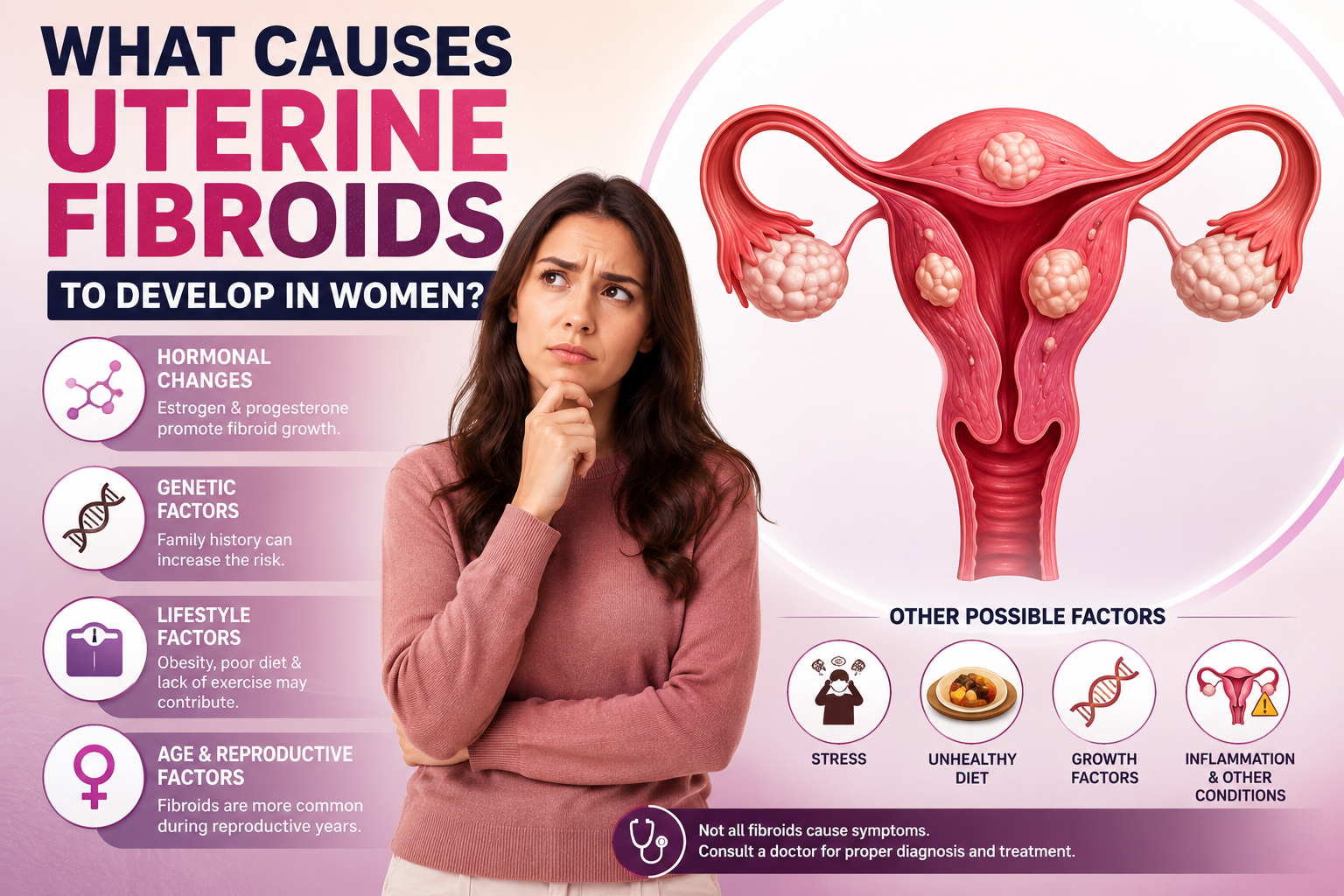
Uterine fibroids develop because of a combination of hormonal, genetic, and biological factors that affect the smooth muscle cells of the uterus.
Although the exact cause remains unknown, research suggests that hormones such as estrogen and progesterone encourage fibroid growth, while inherited genetic changes and individual risk factors increase the likelihood of developing them.
Fibroids are non-cancerous growths and are among the most common gynecological conditions affecting women during their reproductive years.
Many women never realize they have fibroids until they experience symptoms such as heavy menstrual bleeding, pelvic pressure, or frequent urination.
Learning about uterine fibroids can help women understand why these growths occur and when medical evaluation is appropriate.
What Are Uterine Fibroids?
Uterine fibroids are benign tumors that arise from the muscular wall of the uterus, known as the myometrium.
They can: Develop as a single fibroid or multiple fibroids, Range from microscopic to several centimeters in size, Grow within the uterine wall, project into the uterine cavity, or extend outward from the uterus, Remain stable or gradually increase in size over time
According to the American College of Obstetricians and Gynecologists (ACOG), uterine fibroids are the most common benign tumors of the female reproductive tract.
How Do Hormones Contribute to Fibroid Growth?
Hormones play a major role in the development and enlargement of fibroids.
Research suggests that: Estrogen stimulates the growth of fibroid cells., Progesterone also supports fibroid development., Fibroids tend to grow during the reproductive years. Many fibroids shrink naturally after menopause when hormone levels decline.
Hormones do not directly cause fibroids but create conditions that encourage their growth.
Can Genetics Increase the Risk?
Yes.
Genetics is one of the strongest known risk factors.
A woman may have a greater chance of developing fibroids if: Her mother had uterine fibroids., A sister has been diagnosed with fibroids., Certain genetic mutations occur within uterine muscle cells.
Researchers continue to investigate how inherited genes influence fibroid formation.
What Other Factors May Increase the Risk?
Several factors are associated with a higher likelihood of developing uterine fibroids.
These include: Being of reproductive age, Early onset of menstruation, Family history, Obesity, High blood pressure, Certain ethnic backgrounds
Having these risk factors does not guarantee fibroids will develop, but they may increase the probability.
Can Lifestyle Cause Uterine Fibroids?
There is no evidence that lifestyle alone causes uterine fibroids.
However, maintaining overall health may support reproductive wellbeing.
Doctors commonly recommend: Maintaining a healthy weight, Eating a balanced diet, Exercising regularly, Attending routine gynecological check-ups
While these habits cannot prevent fibroids, they contribute to better overall health.
What Symptoms Can Fibroids Cause?
Many fibroids do not produce symptoms.
When symptoms occur, they may include: Heavy or prolonged menstrual bleeding, Pelvic pressure or fullness, Frequent urination, Constipation, Lower back pain, Pain during intercourse, Difficulty conceiving in some women
Symptoms often depend more on the fibroid's size and location than on the number of fibroids present.
How Are Uterine Fibroids Diagnosed?
Doctors usually begin with: A detailed medical history, A pelvic examination
Imaging tests commonly include: Pelvic ultrasound, MRI when additional detail is needed
These investigations help determine: The number of fibroids, Their location, Their size, Whether treatment is necessary
The National Institute for Health and Care Excellence (NICE) recommends imaging to accurately assess fibroids and guide treatment planning.
When Is Treatment Recommended?
Not every fibroid requires treatment.
Doctors may recommend treatment when fibroids cause:
Heavy menstrual bleeding, Persistent pelvic pain, Pressure on the bladder or bowel, Fertility concerns, Rapidly worsening symptoms
One minimally invasive treatment option is Uterine Artery Embolization (UAE). Performed by an interventional radiologist, UAE involves inserting a thin catheter into an artery and delivering tiny particles that block the blood supply to the fibroids. Without an adequate blood supply, the fibroids gradually shrink, helping relieve symptoms while preserving the uterus.
Conclusion
Uterine fibroids develop due to a combination of hormonal influences, genetic factors, and individual risk characteristics rather than a single identifiable cause. Although many fibroids remain small and symptom-free, others can cause heavy menstrual bleeding, pelvic discomfort, or pressure on surrounding organs. Early diagnosis allows doctors to recommend the most appropriate management based on the woman's symptoms, reproductive plans, and the characteristics of the fibroids.
Advances in interventional radiology have made it possible to treat many symptomatic fibroids without major surgery. Uterine Artery Embolization offers a uterus-preserving, minimally invasive alternative that reduces the blood supply to fibroids, allowing them to shrink over time while relieving symptoms. Women seeking expert evaluation can consult an interventional radiologist Jaipur to discuss the most appropriate treatment for their individual condition.
Frequently Asked Questions
What is the exact cause of uterine fibroids?
The exact cause is not fully understood. Current evidence suggests that hormones, genetic changes, and growth factors all contribute to fibroid development.
Can young women develop uterine fibroids?
Yes. Fibroids can develop during the reproductive years, although they become more common as women get older before menopause.
Do all uterine fibroids need treatment?
No. Many fibroids do not cause symptoms and only require regular monitoring. Treatment is generally recommended when symptoms affect quality of life or fertility.
Can uterine fibroids become cancerous?
The vast majority of uterine fibroids are benign. Cancer arising from fibroid-like tissue is extremely rare and is considered a separate condition.
Is Uterine Artery Embolization a non-surgical treatment?
Yes. Uterine Artery Embolization is a minimally invasive, image-guided procedure that treats fibroids by blocking their blood supply without removing the uterus.
Comments