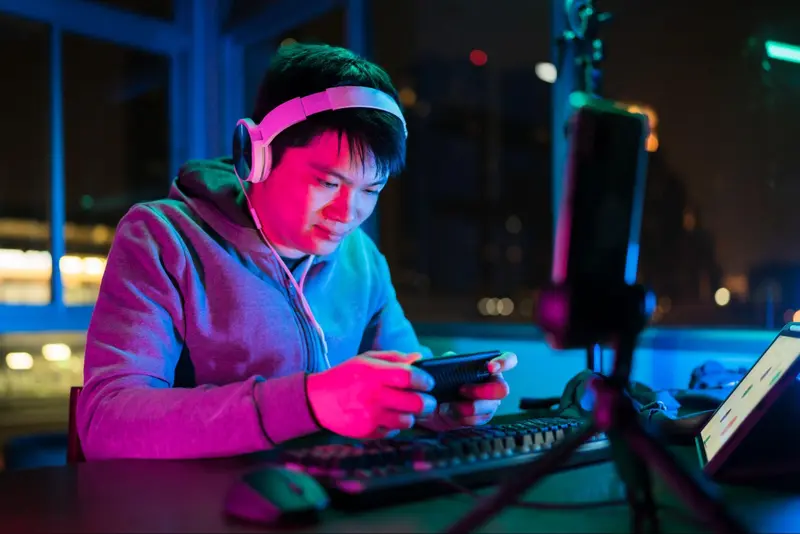
Choosing the best time to stream on Twitch can make a big difference for creators who want to reach more viewers. A great stream can still struggle if it goes live when the target audience is asleep or when the category is crowded with thousands of competing channels.
However, there is no single perfect hour that works for every streamer. Your ideal schedule depends on your audience, location, game category, channel size, and competition.
Twitch itself provides Research Analytics that lets creators compare average viewers, average viewers per channel, and the number of live channels by day and hour. These results can also be filtered by region, category, and streamer language.
What Is the Best Time to Stream on Twitch?
As a general starting point, weekday evenings and weekend afternoons or evenings can be useful periods because many people have free time.
Recent 2026 streaming data suggests that U.S. Twitch viewing is particularly strong during roughly 4 PM to 11 PM Eastern Time, while European audiences are often active during evening hours.
Another 2026 analysis identifies approximately 6 PM to 10 PM Eastern Time as a major peak window. However, these busy hours also bring more competition from other streamers.
So, the busiest time is not automatically the best time for a small channel.
Why Timing Matters on Twitch
When you stream, two important factors work together:
Viewer demand — How many people are watching Twitch and your category.
Competition — How many other channels are live and competing for those viewers.
If you stream when millions of people are online but hundreds of large creators are broadcasting the same game, your channel may have difficulty being discovered.
On the other hand, streaming during a quieter period can mean fewer viewers overall but less competition.
This is why finding the right balance is more useful than simply chasing the largest possible audience.
Best Time for Small Twitch Streamers
New and small channels often need to think differently from established creators.
A large streamer may benefit from peak hours because they already have an established audience. A smaller channel may have a better opportunity during less crowded periods.
Some recent 2026 streaming guides recommend testing weekday mornings, afternoons, or other off-peak periods because fewer competing channels may be live.
For example, instead of automatically streaming at 8 PM every night, you could test:
- Weekday mornings
- Weekday afternoons
- Early evenings
- Late evenings
- Weekend afternoons
Then compare your results.
Best Days to Stream on Twitch
The best day can also depend on your audience.
Friday, Saturday, and Sunday often have strong overall viewing because many people have more free time. However, these days can also attract a large number of competing streamers.
For smaller channels, Monday through Wednesday may sometimes provide opportunities because competition can be lower.
The important point is to test different days rather than assuming that weekends will always produce the best results.
Best Twitch Streaming Times by Audience
Your audience's location should be one of the biggest factors in your schedule.
U.S. Audience
For a primarily U.S.-based audience, afternoon and evening hours can be a useful starting point.
A broad starting window is:
4 PM–11 PM Eastern Time
This covers a large portion of U.S. evening viewing.
European Audience
European viewers often become more active during local evening hours.
For Central European audiences, a useful starting range is approximately:
6 PM–1 AM CET
This should still be tested against your specific category and audience.
International Audience
If your viewers are spread across multiple countries, look for overlapping periods.
For example, an afternoon stream in the United States can overlap with evening viewers in Europe.
This can be particularly useful for English-language gaming channels.
Peak Hours vs. Off-Peak Hours
There are advantages and disadvantages to both.
| Streaming Period | Advantage | Possible Problem |
|---|---|---|
| Peak hours | More viewers | Much more competition |
| Early afternoon | Lower competition | Smaller overall audience |
| Weekday evening | Strong viewer activity | Many large channels |
| Weekend afternoon | Good free-time period | Competition can increase |
| Late night | Potentially less competition | Some audiences are offline |
The best choice depends on your channel size and category.
Why Your Twitch Category Matters
Your game or category can completely change the answer.
A very popular game may have thousands of live channels at peak hours. A smaller category may have fewer competitors, making it easier for viewers to discover your stream.
Twitch's Research Analytics specifically allows creators to filter streaming information by category, making it possible to investigate your own game instead of relying only on general Twitch statistics.
For example, the best time for a Fortnite streamer may not be the best time for someone streaming an older strategy game.
How to Find Your Personal Best Time
Instead of searching endlessly for one perfect hour, create a simple testing plan.
Step 1: Choose Several Time Slots
Pick three or four different periods.
For example:
- Tuesday at 3 PM
- Wednesday at 7 PM
- Friday at 5 PM
- Sunday at 2 PM
Step 2: Keep Your Content Similar
Try to stream similar games or categories during your test.
This makes your comparison more meaningful.
Step 3: Stream Consistently
Keep each test period consistent for several weeks.
Twitch provides analytics that allow creators to review their channel performance over time.
Step 4: Compare Your Results
Look at:
- Average viewers
- Peak viewers
- Followers gained
- Chat activity
- Average watch time
- Returning viewers
Step 5: Choose the Strongest Time
After testing, select the time that produces the best combination of viewers, engagement, and growth.
Consistency Is More Important Than Chasing One Perfect Hour
Finding the best time to stream on Twitch is helpful, but consistency matters too.
If viewers know that you stream every Tuesday and Thursday at the same time, they can build your broadcasts into their routine.
Twitch supports recurring broadcast schedules so viewers can see when a broadcaster plans to go live.
Instead of changing your schedule every day, create a predictable routine.
For example:
Tuesday — 7 PM
Thursday — 7 PM
Saturday — 4 PM
A consistent schedule gives your audience a simple pattern to remember.
Use Time Zones When Planning Your Schedule
Time zones can become confusing when your audience lives in different countries.
Suppose you stream at 8 PM in New York. That same broadcast occurs at a different local time in Los Angeles, London, Paris, and Tokyo.
This is why checking time zones is important for international creators.
WorldTimeAI can help you compare times across different locations and plan your streaming schedule around international audiences.
You can also use its streaming-time tool to explore suitable periods for live gaming.
How Long Should a Twitch Stream Be?
Timing is important, but stream length matters too.
A very short stream may give you less opportunity to attract viewers and build conversations. However, streaming for extremely long periods is not automatically better.
A consistent stream length that you can maintain comfortably is usually easier to build into a long-term schedule.
For example, you might choose:
- 2-hour streams
- 3-hour streams
- 4-hour streams
The best choice depends on your content and audience.
Avoid These Common Scheduling Mistakes
Streaming Only at Peak Hours
Peak hours have more viewers, but they also have more competition.
Changing Your Schedule Constantly
Viewers may not know when to return if your schedule changes every day.
Ignoring Your Audience's Time Zone
A schedule that works for you may be inconvenient for your target viewers.
Looking Only at Total Viewers
A large category can have many viewers but also enormous competition. Viewer-to-channel conditions are important.
Ignoring Your Own Analytics
General studies can provide a starting point, but your own audience data is more valuable for building a personalized schedule.
Twitch Analytics Can Help
Twitch's Research Analytics is especially useful because it provides data about different streaming hours and days. It can also be filtered by region, category, and language.
This means you do not have to rely entirely on generic advice such as "always stream at 8 PM."
Instead, you can investigate:
Which hours have viewers?
Which hours have fewer competing channels?
Which hours work best for my game?
These questions can lead to a much more useful streaming strategy.
WorldTimeAI for Twitch Streaming Schedules
WorldTimeAI provides a dedicated tool for people looking for the best time to stream on Twitch.
The tool can be useful when comparing different time periods and planning broadcasts for viewers in different locations.
This is especially helpful for creators who want to coordinate their streaming schedule with audiences across multiple time zones.
Frequently Asked Questions
What is the best time to stream on Twitch?
There is no universal best time. A useful starting point is weekday evenings and weekend afternoons or evenings, but your ideal time depends on your audience and category.
Is evening a good time to stream?
Yes. Evening hours often have strong viewer activity, but competition can also be high.
What is the best time for a small Twitch channel?
Smaller channels can benefit from testing off-peak periods when competition is lower. The ideal window depends on the category and audience.
Are weekends good for Twitch streaming?
Weekends can have strong viewer activity, but they can also have more competing channels. Test weekend and weekday slots to see what works for your channel.
Should I stream at the same time every week?
Yes. A consistent schedule helps viewers know when to return and can make your channel easier to follow. Twitch supports recurring broadcast schedules.
How can I find my personal best streaming time?
Use your Twitch analytics, test several days and hours, compare average viewers and engagement, and select the strongest recurring time.
Conclusion
The best time to stream on Twitch is not necessarily the hour with the highest number of viewers. For many creators, the better opportunity is the period where viewer demand is strong but competition is manageable.
A good starting point is to test weekday evenings and weekend periods. If you are a smaller streamer, also experiment with off-peak hours. Most importantly, use your own Twitch analytics to understand when your audience is actually watching.
Twitch's Research Analytics provides day-and-hour data that can be filtered by region and category, giving creators a better way to plan their schedules.
With a consistent schedule, smart time-zone planning, and regular testing, you can find a streaming routine that fits your audience and gives your channel a better opportunity to grow.
Comments